
For patients from Canada, the UK, the US and beyond
MRI in China: skip the months-long wait, cut the bill.
all-in
One-area MRI, including the hospital fee, booking, English report and DICOM files.
Hospital part capped at ¥470 (about $70) by Beijing's official schedule. All prices →
We book your MRI, CT or PET-CT scan at a hospital in mainland China. You go home with your images on DICOM and the report in English.
An independent coordination service. Not a hospital, and not for emergencies.
Time and price
Weeks at home. Hours in China.
Pick your country to see the published wait or price at home next to ours.
MRI wait times in Canada, province by province →
Waits differ by region and by urgency, and urgent cases are seen first. Travelling for a scan is not suitable for an urgent problem. Ask your own doctor before you decide.
An MRI at home, and in China
Wait for an MRI
Canada: median wait reported by physicians in 2025 (CT: 8.8 weeks). Ours: typical time to the scan once your booking is confirmed, depending on hospital availability.
Source: Waiting Your Turn: Wait Times for Health Care in Canada, 2025 Report, Fraser Institute. Published 2025-12-09.
Wait for an MRI
England: 21.4% of the 391,764 patients waiting for an MRI at the end of July 2026 had waited six weeks or more. Ours: typical time to the scan once your booking is confirmed, depending on hospital availability.
Source: NHS Diagnostic Waiting Times and Activity Data, July 2026 Monthly Report, NHS England. Published 2026-09-10.
Price of a brain MRI
US: median insurer-negotiated hospital price for a brain MRI with and without contrast, across 2,630 hospitals. Ours: all-in starting price for one area with contrast, including the hospital fee (capped at ¥555 in Beijing), booking, English report and DICOM.
Source: Factors Associated With Hospital Commercial Negotiated Price for Magnetic Resonance Imaging of Brain, Jiang et al., JAMA Network Open, 2023. Published 2023-03-21.
Beijing: Notice on standardising radiology price items, Jing Yi Bao Fa [2025] No. 13, Annex 3 (in Chinese), Beijing Municipal Healthcare Security Bureau and Beijing Municipal Human Resources and Social Security Bureau.

A clearer way to arrange your scan
The details, in English.
Tell us which exam you need and when you plan to be in China. We bring the hospital, the appointment date and the costs together in a written quote.
You decide after that. The hospital's own radiology staff carry out the examination.
What we arrange
Three kinds of scan.
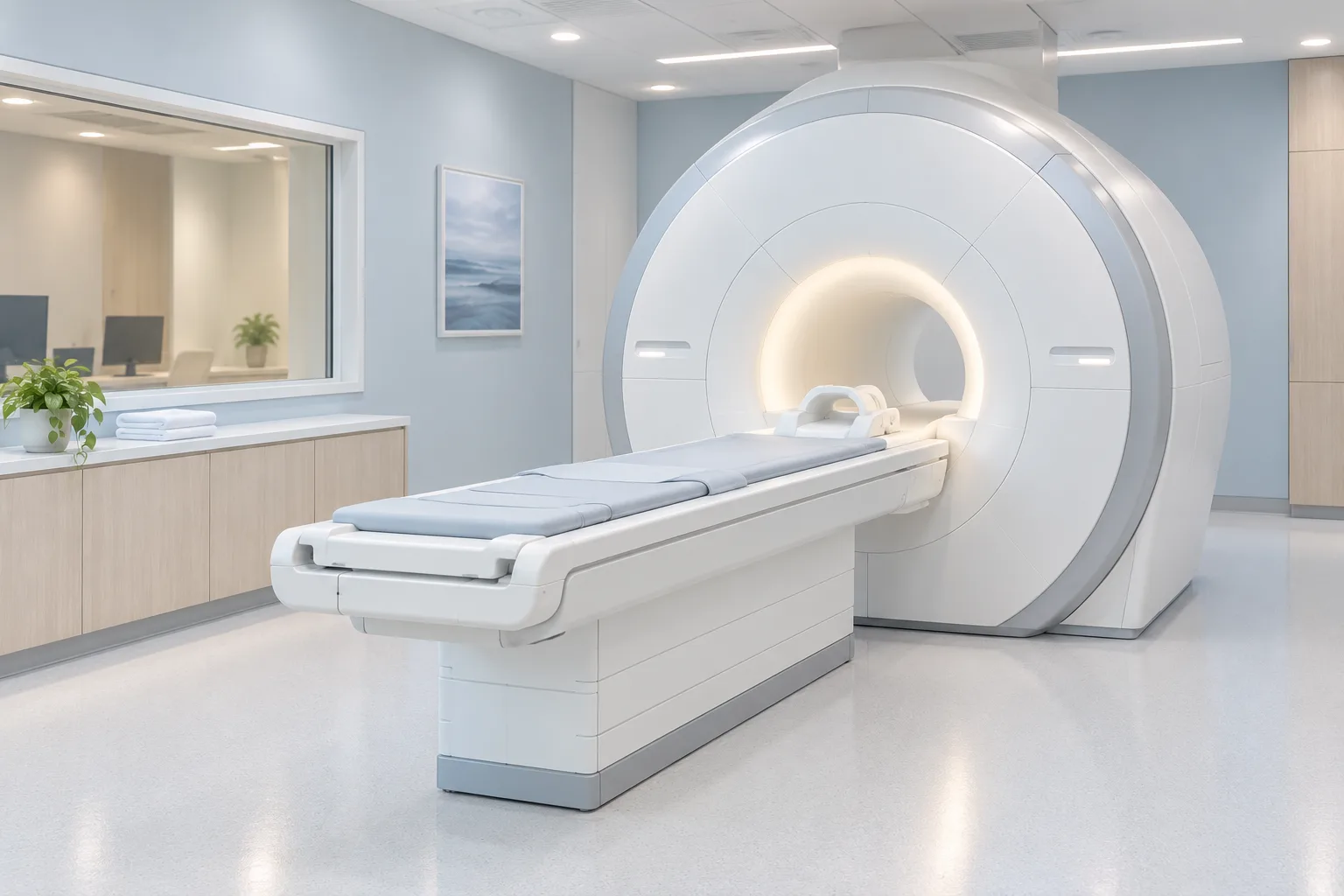
MRI scan in China
Magnetic resonance imaging uses a strong magnetic field, radio waves and a computer to produce detailed pictures of the inside of the body. It does not use X-rays.
Read about MRI →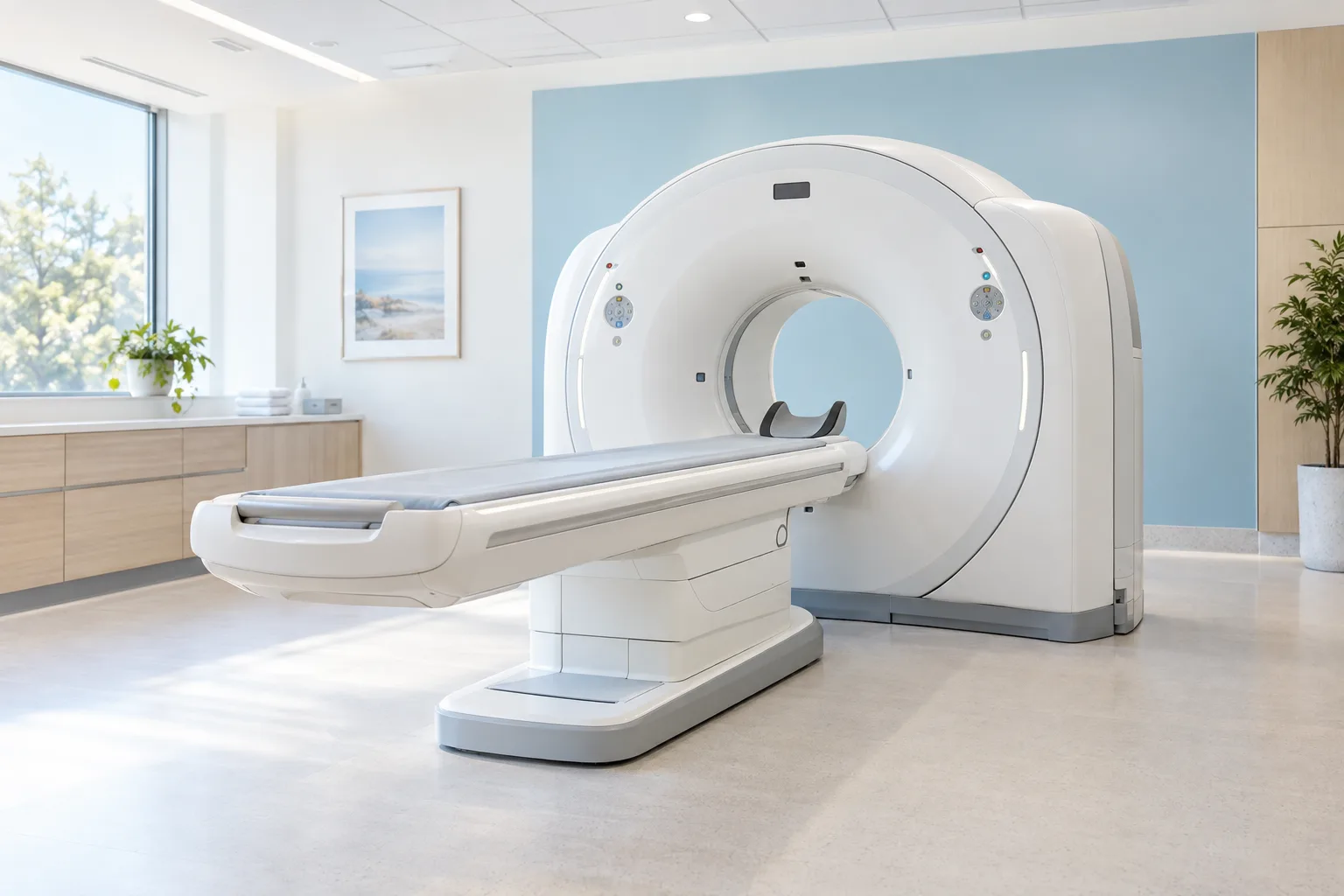
CT scan in China
Computed tomography uses X-ray technology to produce detailed cross-sectional images of the inside of the body. Unlike MRI, it uses ionising radiation.
Read about CT →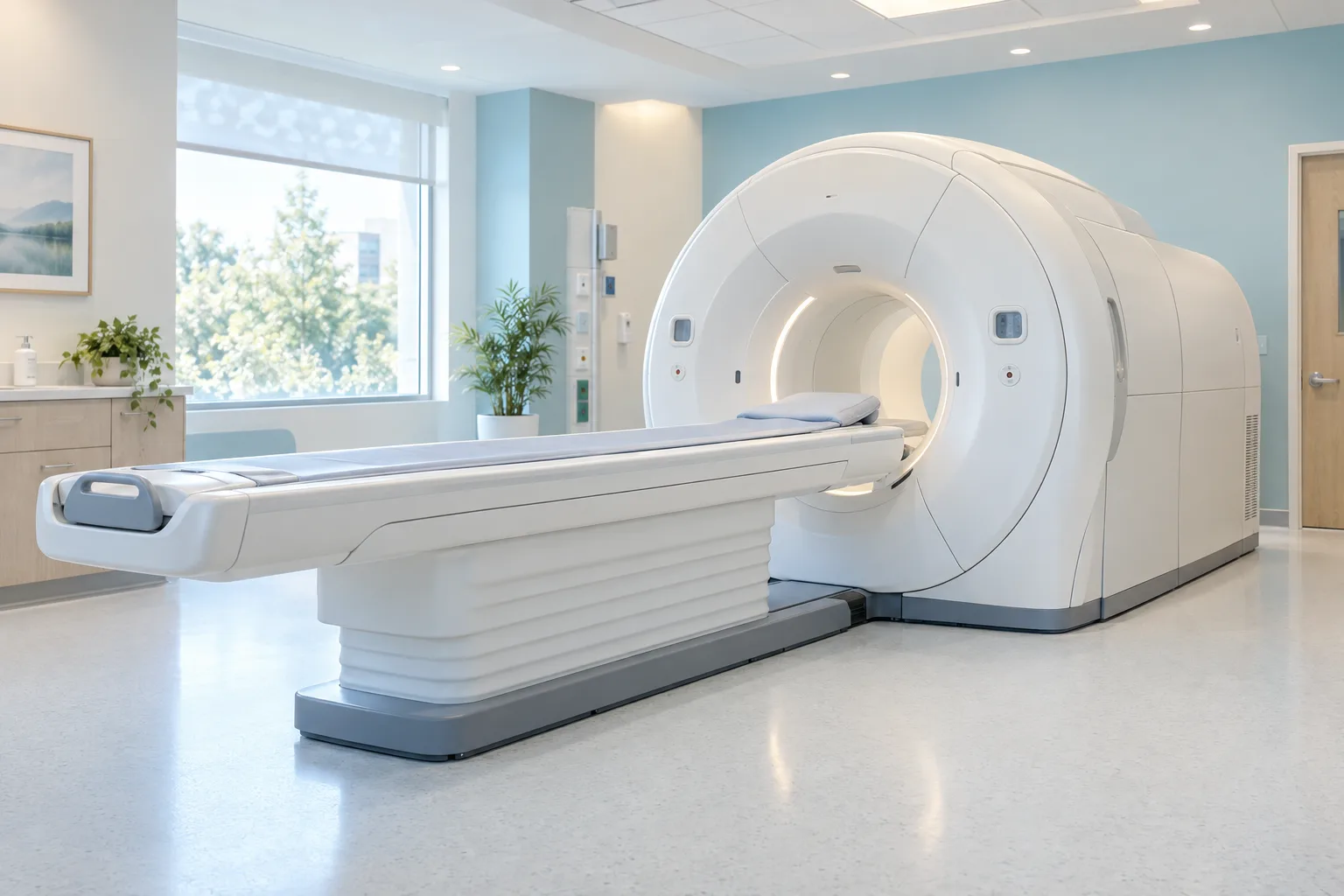
PET-CT scan in China
PET-CT combines two exams. A small amount of radioactive material, called a radiotracer, shows how tissues are functioning, and a CT scan shows where. The most common radiotracer is F-18 FDG, which behaves like glucose.
Read about PET-CT →How it works
From request to results, in four steps.

Send your request
Tell us the exam, the body area and when you plan to be in China.
Get a written quote
We reply with the hospital, the appointment date and every cost in writing.
Attend your scan
The exam is done by the hospital's own radiology staff.
Take your results home
Your images as DICOM files, and the report in English with the Chinese original.
What you take home
Results your doctor at home can use.
A scan is only useful if the next doctor can read it. So the deliverable is fixed, whichever hospital you attend.

- DICOM image files
- The full image set in the standard format for medical imaging, so software in other countries can open it.
- Report in English
- A translation of the report written by the hospital radiologist. It is a translation, not a second opinion.
- Original Chinese report
- Always included, so nothing depends on the translation alone.
MRI by body area
Know the exam before you travel.
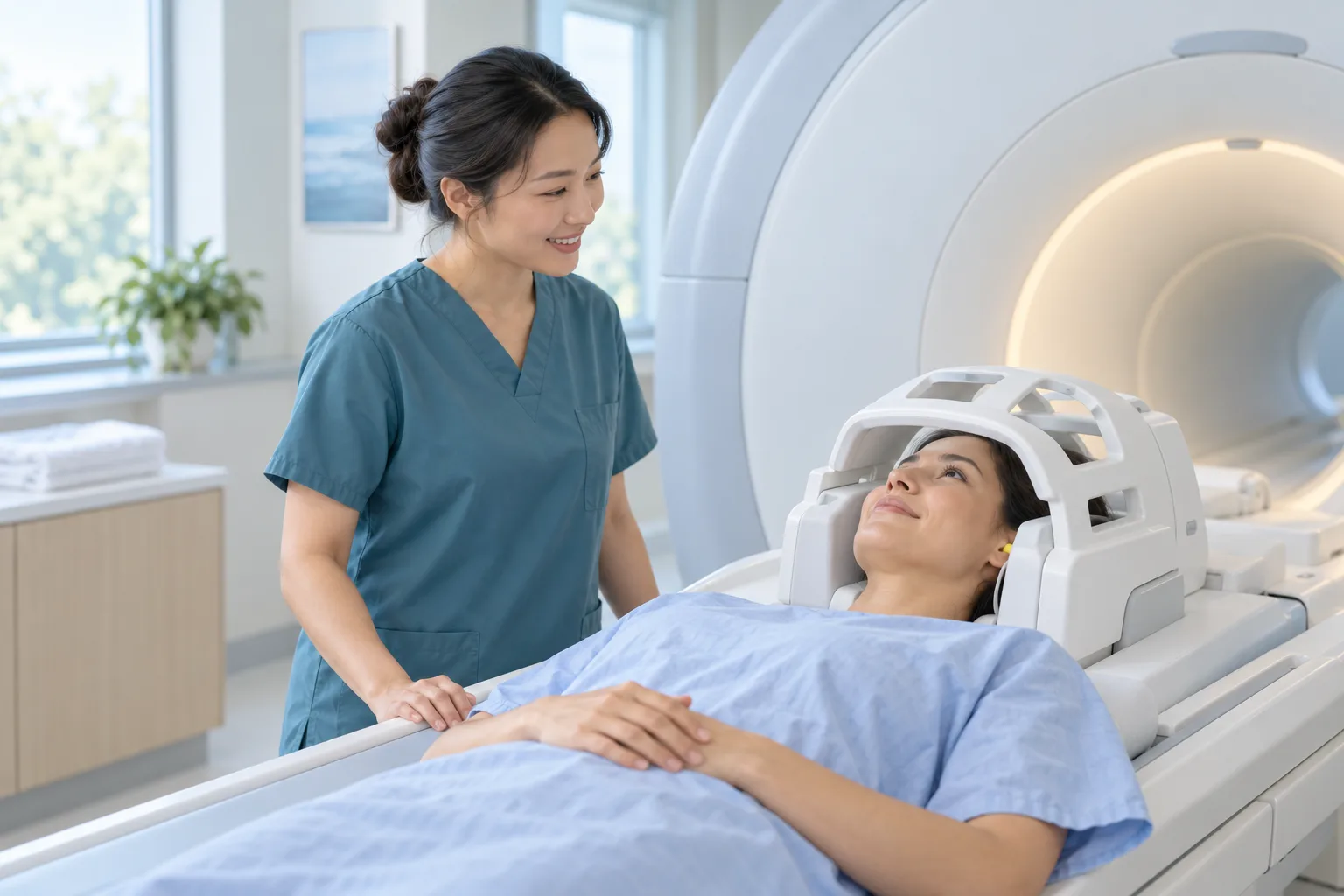
Brain MRI
A brain MRI, also called a head MRI, uses a magnetic field, radio waves and a computer to produce pictures of the brain. It does not use X-rays.
Read about Brain MRI →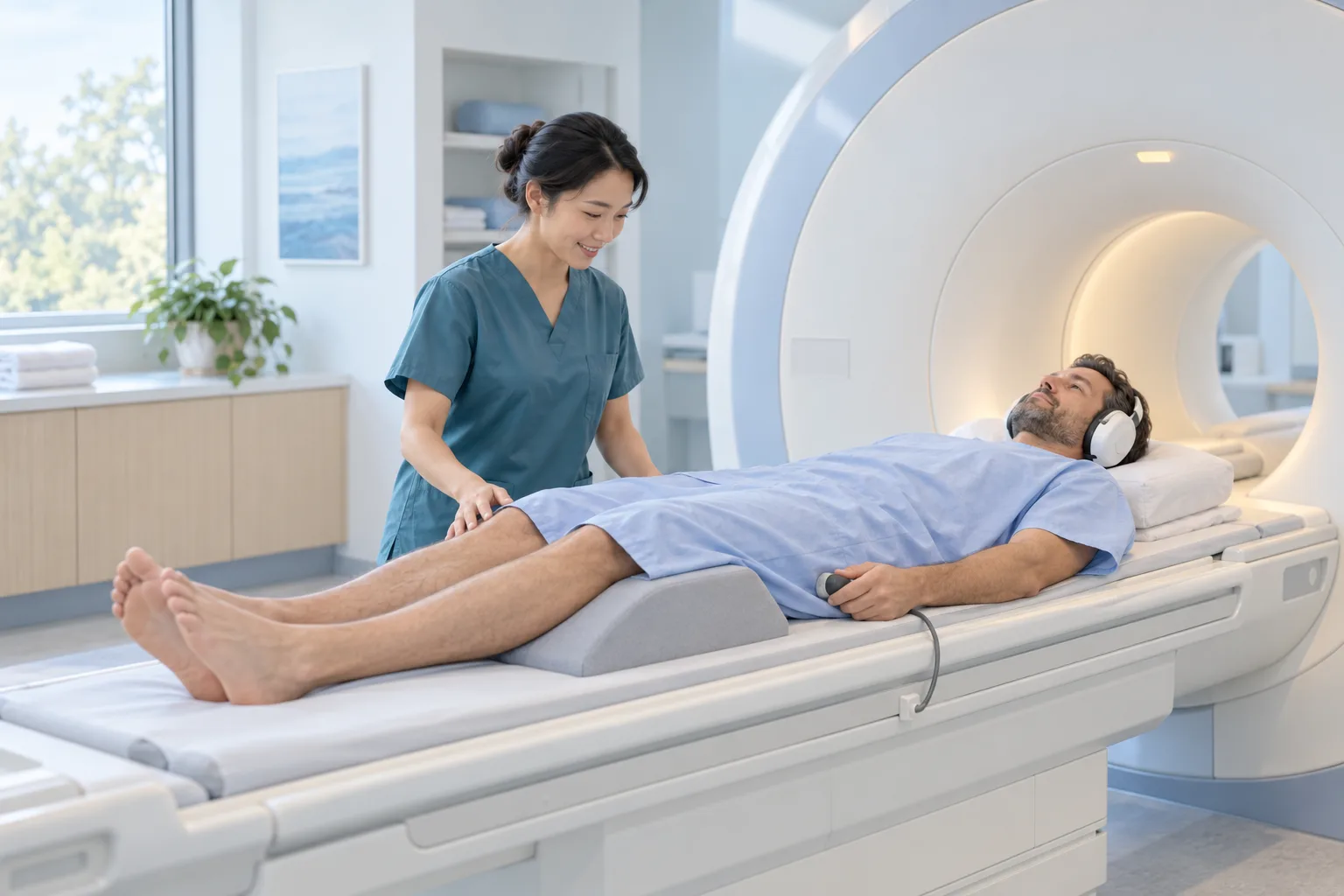
Spine MRI
A spine MRI produces detailed pictures of the vertebrae, discs, spinal cord and nerves without using X-rays.
Read about Spine MRI →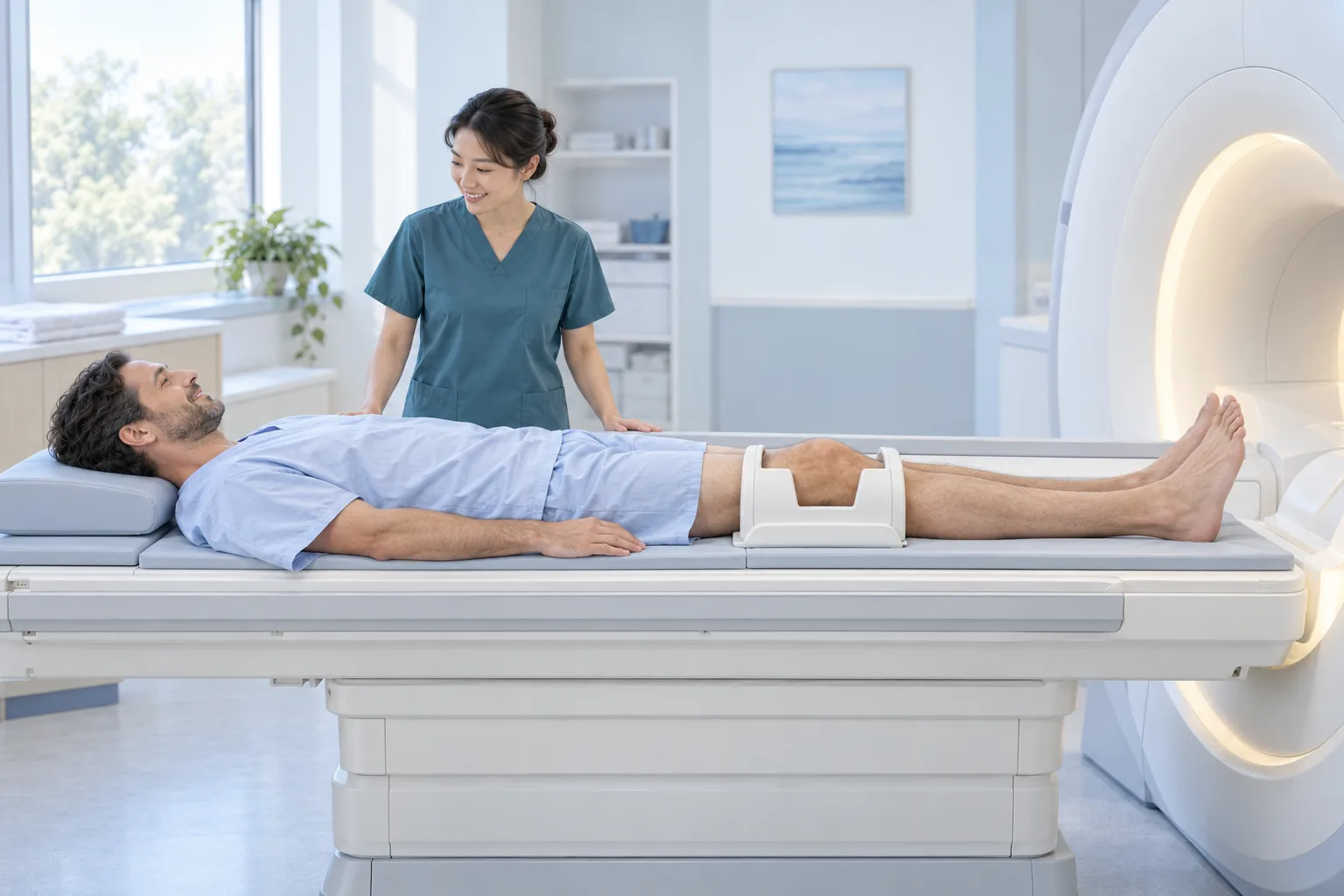
Knee MRI
A knee MRI produces detailed pictures of the bones, cartilage, ligaments and tendons of the knee without using X-rays.
Read about Knee MRI →Plain boundaries
What we do, and what we leave to doctors.
- We arrange
- The appointment, the paperwork around it and the English translation of your report.
- The hospital decides
- Whether an exam is appropriate, whether contrast is used, and what the images show.
- We do not
- Diagnose, recommend a scan, or interpret your results. We are not an emergency service.
- Cities and hospitals
- Your written quote names the city and the hospital, with its official name, before you commit.
Cost
How much is an MRI in China?
It depends on the body area, on contrast, and on the hospital. We explain each part of the price, and you get the exact figure in writing before anything is booked.
Is MRI in China a hospital or a clinic?
No. MRI in China is an independent coordination service, operated by Guoyikang Medical Group (国医康医疗集团) in China. We arrange the appointment and the English translation of your report. The scan itself is performed, and the report written, by the staff of the hospital you attend.
Which scans can you arrange?
MRI, CT and PET-CT. Tell us the exam and the body area in your request. If you are not sure which exam your doctor asked for, send us the wording on your referral.
Can you tell me which scan I need?
No. Choosing an exam is a medical decision, and we do not give medical advice. The hospital decides whether an exam is appropriate. If you have a referral letter or earlier reports, mention that in your request so the hospital can confirm the right exam.
What do I take home after the scan?
Two things: your images as DICOM files, and the hospital radiologist’s report translated into English, together with the original Chinese report.
Will my doctor at home be able to open the images?
DICOM is the standard file format for medical images, so imaging software in other countries can open the files. Whether your own doctor relies on a report written abroad or asks for a local re-read is their decision.